
How much electricity does a manufacturing business need?
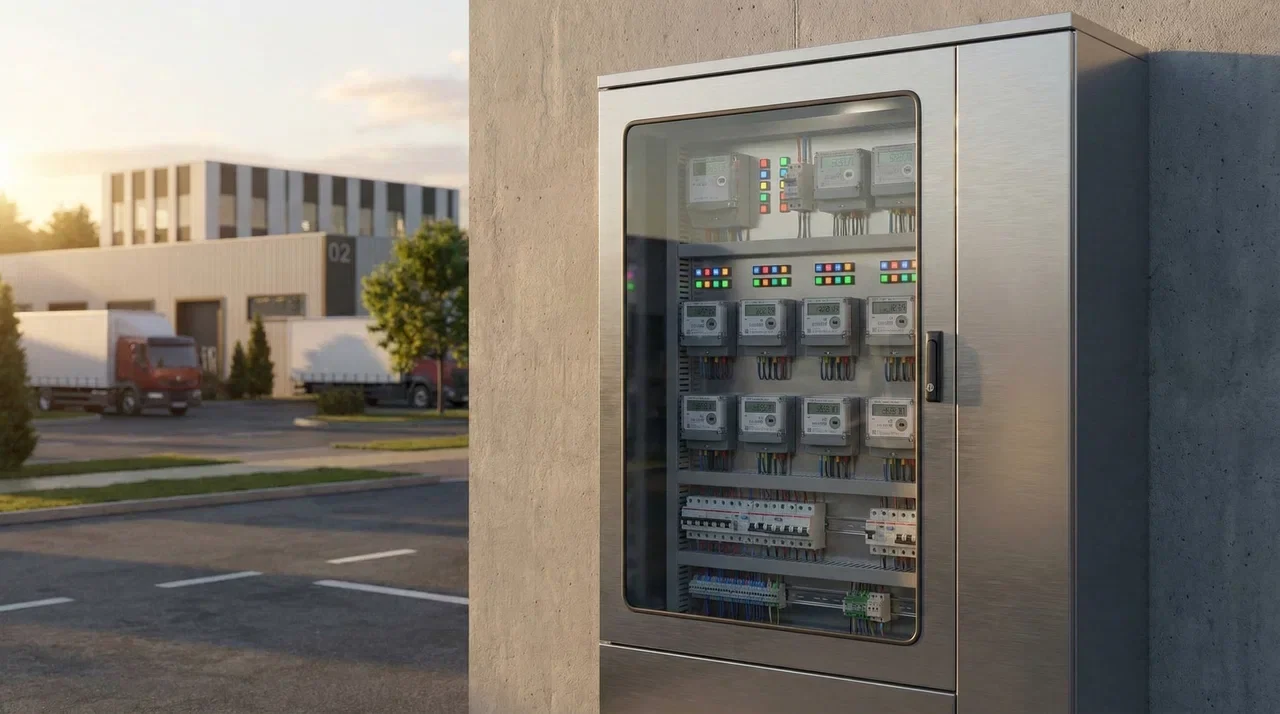
When selecting a production plot, one of the main questions is how much electrical capacity the business will need and whether the site can support that load.
A small assembly operation and a business with several energy-intensive lines have very different requirements. There is therefore no universal rule that “100 or 500 kW is enough for any production facility”.
The required capacity depends on the equipment, its operating pattern, the building's utility systems and the business's development plans.
Electricity supply should therefore be assessed before purchasing an industrial plot.
Power and energy consumption: what is the difference?
These concepts are often confused.
Power, measured in kW or MW, is the electrical load that a business must be able to draw at a particular moment.
Energy consumption, measured in kWh, is the amount of electricity actually used over a given period.
When selecting a production site, the required electrical capacity is the first figure you need to know.
Two businesses may consume similar amounts of electricity per month yet have very different peak loads.
What determines a production facility's electrical capacity?
The main load comes from production equipment.
A preliminary calculation takes account of:
- machine tools;
- production lines;
- compressors;
- welding equipment;
- pumps;
- ventilation;
- heating and cooling systems;
- lighting;
- warehouse equipment;
- the administrative and staff facilities.
However, simply adding the rated power of every device is not enough.
Equipment operates at different loads and not always simultaneously. A professional calculation therefore considers the business's operating pattern, electrical load and the simultaneous operation of equipment.
How to determine the required capacity
Before selecting an industrial site, make a list of the main electricity-consuming equipment.
For a preliminary assessment, establish:
- Which equipment will be installed.
- Its rated power.
- How many units will be needed.
- Which units will operate simultaneously.
- The intended operating pattern.
- The load created by the building's utility systems.
- Whether production expansion is planned.
You can then determine the design load and the business's electricity supply requirements.
How electricity demand differs between production activities
The building area alone is not a reliable guide.
A small workshop with energy-intensive machines may need more capacity than a much larger combined production and warehouse facility.
For example, requirements differ between:
- assembly operations;
- furniture manufacturers;
- metalworking businesses;
- building material production;
- businesses with welding stations;
- automated production lines.
The main factor is the production process and equipment used, rather than the area of the plot or building.
What increases the electrical load?
Equipment with high electricity demand deserves particular attention.
The total load may be significantly affected by:
- electric furnaces;
- compressors;
- welding units;
- metalworking machines;
- refrigeration equipment;
- pumps;
- electric heating;
- high-capacity ventilation;
- several lines operating simultaneously.
It is therefore useful to have at least a preliminary equipment list before searching for a plot.
Why allow capacity for growth?
Production rarely remains unchanged.
A company may add another line, expand a workshop or automate particular processes.
If the site was selected solely for the initial load, further development may require additional solutions.
Calculations should therefore reflect the business's actual plans:
- adding equipment;
- expanding production;
- constructing an additional building;
- launching new production lines.
There is no universal percentage for spare capacity; it should match the plans of the specific business.
Why “electricity nearby” is not enough
Standalone industrial plot listings sometimes state:
“electricity nearby” or “a power line runs along the boundary”.
This information is not sufficient for a manufacturing business.
You need to establish whether the site's electricity supply can meet the actual load of the future facility.
Russian grid connection rules distinguish maximum capacity and provide for an assessment of the technical feasibility of connection.
Nearby electricity networks alone therefore do not answer the business's main question: can the site support its specific production requirements?
Why determine capacity before buying land?
The correct sequence is:
equipment → load calculation → site requirements → plot selection.
If you buy land first and calculate equipment demand afterwards, you may discover that the chosen site requires additional technical solutions.
Electrical infrastructure should therefore be a site selection criterion alongside area, roads, gas, water and expansion potential.
What information to provide when selecting an industrial site
To select a plot for a specific production facility, establish in advance:
- the type of activity;
- the main equipment;
- the approximate electrical load;
- the number of production lines;
- the building area;
- the operating pattern;
- gas and water requirements;
- anticipated facility expansion.
Even before the project is fully developed, these parameters help you select a site much more accurately.
Production plots: why price is not the only consideration
The cost of land is just one parameter.
A business also needs to consider:
- utility infrastructure;
- electricity supply capabilities;
- access for heavy goods vehicles;
- the plot layout;
- space for the building;
- land reserved for expansion;
- maintenance of the shared grounds.
A cheap standalone industrial plot is therefore not always the most convenient option.
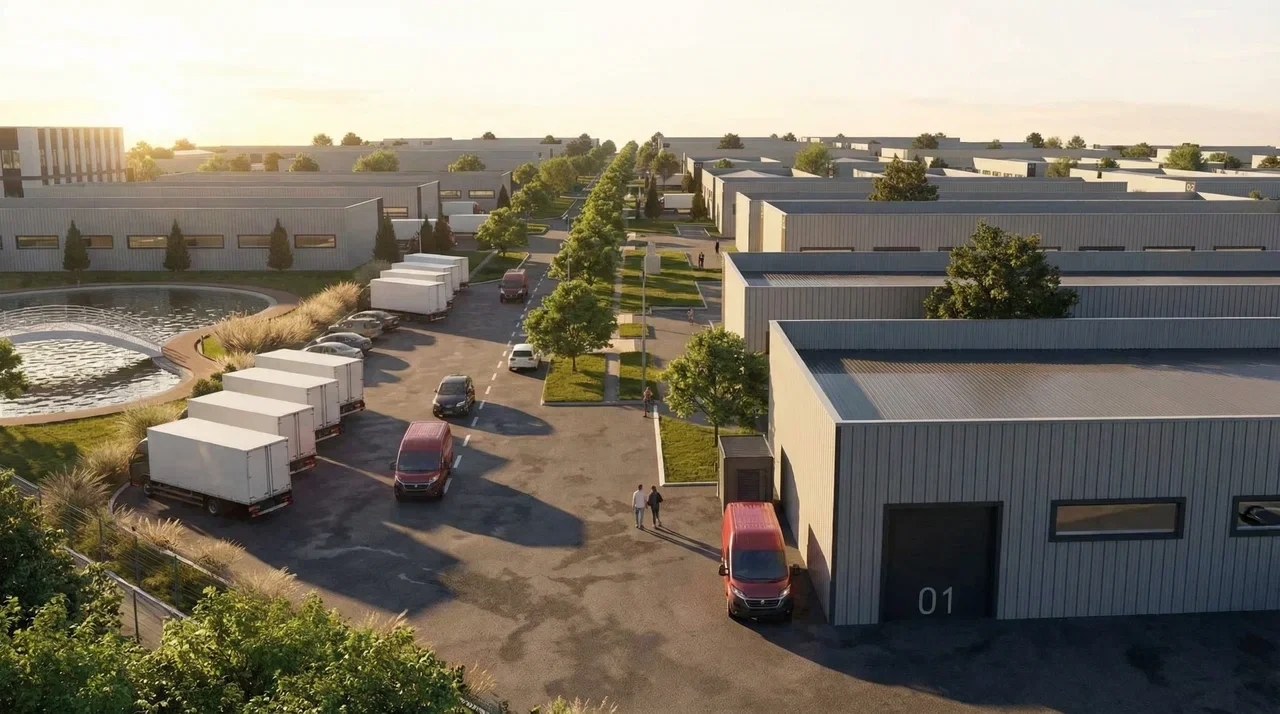
In an industrial park, land forms part of a unified area developed with the needs of manufacturing and warehousing businesses in mind.
Production plots at TECHNOPARK16
TECHNOPARK16 is located in the Pestretsy District of the Republic of Tatarstan, near Novoye Shigaleyevo and close to Kazan.
The project covers 42 hectares and provides for 104 plots starting from 2,000 m². These parameters are stated on the project's current website.
The site is designed to accommodate production and warehouse facilities.
When selecting a plot, establish in advance:
- the area of the future facility;
- the required electrical load;
- utility infrastructure requirements;
- heavy goods vehicle movements;
- the business's expansion plans.
This allows you to select land for a specific business's needs, rather than based only on area and price.
View plots for production at TECHNOPARK16
What to check before selecting a plot
Before making a decision, answer seven questions:
- Which equipment will operate at the business?
- What electrical load will be required?
- Which equipment operates simultaneously?
- Is spare capacity needed for new lines?
- What will the production facility's area be?
- What other utility resources are needed?
- Is business expansion planned?
You can then compare industrial sites on a practical basis.
Frequently asked questions
How many kW does a manufacturing business need?
There is no single standard. Required capacity depends on the equipment, operating pattern, utility systems and business development plans.
Can capacity be calculated from workshop area?
Only very approximately. The production process and equipment are much more important.
Should the power of every machine be added together?
Total installed power is useful for an initial assessment, but the design load also depends on the operating pattern and simultaneous use of equipment.
What do power in kW and consumption in kWh mean?
kW measures equipment power and electrical load, while kWh measures the actual amount of electricity consumed.
Should spare capacity be included?
Actual expansion plans must be considered: new lines, additional equipment and increased production space.
When should required capacity be determined?
Preferably before making the final choice of an industrial plot.
Key points when selecting a site
The answer to “how much electricity does production need?” does not begin with the plot area or a universal figure in kilowatts.
First establish:
production process → equipment → operating pattern → electrical load → expansion prospects.
Only then select a plot that meets the business's requirements.
TECHNOPARK16 offers plots from 2,000 m² for production and warehouse facilities near Kazan.
Send an enquiry and tell us about your future business. The TECHNOPARK16 team will help you select a site based on your project's parameters.